| The Saints: "Monkey Puzzle" (Rose 1, Feb. 1981) |


 Mehr ...
The Monkey Puzzle, the Saints' first full-length album after the departure of founding guitarist/songwriter Ed Kuepper, is quite different from the first three Saints LPs -- which were all different from each other anyway -- but holds up well to the test of time. Instead of the abrasive punk or Memphisy sound of earlier records, Monkey Puzzle's jangly rock hints at the direction bands like R.E.M. took mid-'80s college rock. Lead singer Chris Bailey's distinctive, resonant voice shines on the gorgeous "Let's Pretend", the very Byrdsy "Always", and the incendiary "Simple Love". The Australian version also includes the classic B-side, "In the Mirror", with its highly memorable bass intro and astounding hooks, and a wonderfully sloppy and loose cover of Larry Williams' "Dizzy Miss Lizzy". Elsewhere, the fare is more conventional rock, albeit with chiming guitar, great songs, and singing. Barrington Francis' jangly guitar, original drummer Ivor Hay, and bassist Janine Hall give the band an entirely new dimension. On its release, Monkey Puzzle shocked fans with its maturity; though it was made by 21-year-old punk, most other 21-year-old punks thought it was too much like regular rock -- a sin in 1981. Since it wasn't released in the U.S. or England, not many people heard it anyway. Ironically, a few years later, bands like Guadalcanal Diary and the Connells came to the forefront using a very similar approach. Of course, by then Bailey had moved into a whole new musical space. Highly recommended.
(by Geoff Ginsberg, AllMusic.com)
|
| Gun Club: "Fire Of Love" (Rose 8, Dez. 1981) |

Mehr ...
The Gun Club's debut is the watermark for all post-punk roots music. This features the late Jeffrey Lee Pierce's swamped-out brand of roiling rock, swaggerific hell-bound blues, and gothic country. With Pierce's wailing high lonesome slide guitar twinned with Ward Dotson's spine-shaking riffs and the solid yet off-the-rails rhythm section of bassist Rob Ritter and drummer Terry Graham, the Gun Club burst out of L.A. in the early '80s with a bone to pick and a mountain to move -- and they accomplished both on their debut album. With awesome, stripped to the frame production by the Flesh Eaters' Chris D., Fire of Love blew away all expectations -- and with good reason. Nobody has heard music like this before or since. Pierce's songs were rooted in his land of Texas. On "Sex Beat", a razor-sharp country one-two shuffle becomes a howling wind as Pierce's wasted, half-sung half-howled vocals relate a tale of voodoo, sex, dope, and death. The song choogles like a freight train coming undone in a twister. Here Black Flag, the Sex Pistols, Son House, and the coughing, hacking rambling ghost of Hank Williams all converge in a reckless mass of seething energy and nearly evil intent. As if the opener weren't enough of a jolt, the Gun Club follow this with a careening version of House's "Preachin the Blues," full of staccato phrasing and blazing slide. But it isn't until the anthemic, opiate-addled country of "She's Like Heroin to Me" and the truly frightening punk-blues of "Ghost on the Highway" that the listener comes to grip with the awesome terror that is the Gun Club. The songs become rock & roll ciphers, erasing themselves as soon as they speak, heading off into the whirlwind of a storm that is so big, so black, and so awful one cannot meditate on anything but its power. Fire of Love may be just what the doctor ordered, but to cure or kill is anybody's guess.
(Thom Jurek, All Music Guide)
Das legendäre und unerreichte Album »Fire of Love« wurde ursprünglich 1981 in den Ruby Studios aufgenommen. Mit diesem Album begann die Karriere der Vorreiter der 80er-Jahre-Szene The Gun Club um ihren charismatischen Frontmann Jeffrey Lee Pierce. The Gun Club können ohne Zweifel als eine der innovativsten und einflussreichsten Bands dieser Ära bezeichnet werden - oft kopiert aber nie erreicht. Besonders ihre Zusammenführung von Delta Blues Elementen in den energetischen Punkrock der L.A. Szene machte diese Platte auf der unzählige Musiker dem »Club« ihre Liebe erklärten, zum Grundstein einer Legende.
|
| The Saints: "Out In The Jungle" (Rose 11, März 1982) |

Mehr ...
The file texte/Saints-Jungle.htm does not exist
|
| Johnny Thunders: "Hurt Me" (Rose 26, Jan. 1984) |

Mehr ...
The file texte/JThunders-HurtMe.htm does not exist
|
| The Saints: "A Little Madness To Be Free" (Rose 38, Nov. 1984) |

Mehr ...
|
On this album, the Saints shift gears yet again. A Little Madness to
Be Free takes the band (which is actually just a vehicle for singer Chris
Bailey at this point) in a denser more layered direction. This time, brass
and strings dominate with lush acoustic guitars underneath. Obviously,
any trace of the punk band that was, is gone. The power, however, remains.
Like it's follow up, the devastating All Fools Day, this record explores
the depths of irony, and the ironies of depth. Through exploration of
the soul there is (musical at least) redemption. From the incredibly beautiful
photo of a bay at sunset on the album cover, to the opening track, "Down
the Drain," the tone is set. "Still I think it's better to stand
out in the rain/ then go slipping on down the drain," Bailey sings.
A melancholy rainy day vibe so damn gray it's vibrant. You can't help
but be transported by it. This is the kind of album that makes you think
about stuff. Stuff you'd rather not think about, like, "what the
hell have I done with my life." Somehow there is catharsis, so the
end result is not an overall bummer. The somber and powerful, "Photograph"
tells of a lost love, and the beautiful, "Angels" will leave
you singing along ("we can't waste another day") to the point
of wanting to play the track again. The album concludes with one of Bailey's
all time classic songs, "Ghostships," a track so amazing he
went and put it on several more albums, re-recording it twice. While electric
guitars are not the centerpiece of the sound here, the layers make for
an equally powerful experience. Suprisngly, there are really no keyboards
to speak of, which is very unusual for a non-guitar rock album. By this
point in his career, Chris Bailey had come into his own as an arranger
and it really shows. Certainly one of their most obscure discs, but ultimately
as rewarding as the classics, I'm Stranded, Eternally Yours and All Fools
Day.
(by Geoff Ginsberg, AMG)
|
|
| Chris D./Divine Horsemen: "Time Stands Still" (Rose 46, 1984) |

Mehr ...
Chris D. (aka Chris Desjardins) is a guy whose voice practically defines the notion of "acquired taste," his lyrics are ridiculously pretentious as often as they're pithy and effective (if not more so), and he insists on walking through the same dark corners in his songs so often I'm sure he no longer needs a flashlight, but damned if he doesn't have great taste in musical collaborators. Some of the finest players on the L.A. punk scene made their way through Desjardins's best-known band, the Flesh Eaters, and for 1984's Time Stands Still, a country-influenced album designed to highlight the less-abrasive side of his musical personality, Desjardins rounded up a stellar roster of friends and compatriots to help bring it home. Dave Alvin and Bill Bateman from the Blasters, John Doe from X, Jeffrey Lee Pierce and Kid Congo Powers from the Gun Club, Dan Stuart and Chris Cacavas from Green on Red, and Slim Evans from Rank & File are among the musicians who dropped by to join Desjardins on the sessions for Time Stands Still, and from a musical standpoint this is one of the most satisfying albums he's ever made. Desjardins softened the jagged edges of his melodies a bit for these songs, and there's a strange beauty and disquieting presence in these performances that proves Chris makes friends with the right people, especially on the graceful opener "When the Rain Comes Down," the spectral "Little Sister," and the hypnotically powerful title track, propelled by the superb guitar interplay of Doe and Pierce. And while she was hardly a major name on the scene at the time, Desjardins's then-amour Julie Christensen is a consistent and welcome presence as a backing vocalist, adding a calming grace to the music; Chris himself is in typically wobbly and histrionic form, but this time the quality of his surroundings makes up for it.
(by Mark Deming, All Music Guide)
|
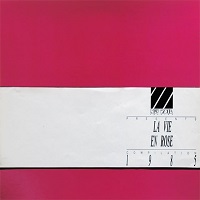
| "La Vie En Rose" (Rose 50, 1985) |
|
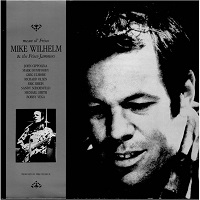
| Mike Wilhelm: "Mean Ol' Frisco" (Rose 70, 1985) |
|
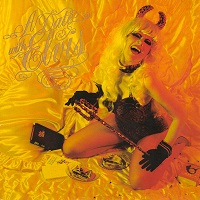
| The Cramps: "A Date With Elvis" (Rose 81, 1986) |
|
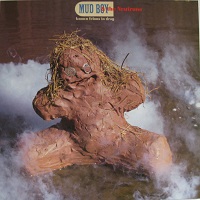
| Mud Boy & The Neutrons: "Known Felons In Drag" (Rose 98, 1986) |
|
| "Play New Rose For Me" (Rose 100, 1986) |
|
| Alex Chilton: "High Priest" (Rose 130, 1987) |
 [Big Star (1972)]
Mehr ...
From his humble beginnings as a Box Top, Alex went on to become a Big Star and well respected cult figure among the independent music press and the fans as well. He's got a nice balance of styles here and the rotating cast of musicians helps to keep the record feeling fresh. And if any of you collect "cover tunes" there's a version of "Volare" here to bring tears to your eyes. And the cover photos, well you just can't find that type of sincerity nowadays.
(TralFaz-Archives)
|
| Chris D. & Divine Horsemen: "Snake Handler" (Rose 134, 1988) |

|
| Eleventh Dream Day: "Prairie School Freakout" (Rose 159, 1988) |
 [Old Paint (Freakwater, 1995) |
Tortoise]
[Old Paint (Freakwater, 1995) |
Tortoise]
Mehr ...
Following the strum of their own twin-guitar attack, Chicago-by-way-of-Kentucky's Eleventh Dream Day issued their second release (the purposefully misspelled), Prarie School Freakout, in 1988. It certainly didn't have much in common with the noise rock other Chicago-area bands like Big Black and the Jesus Lizard were grinding out at the time. Granted, it rocks almost as hard, but sounds a whole lot more Californian, or even Southwestern. References include Neil Young (the guitar work, not the vocals), X (the vocals), the Dream Syndicate (the vocals and the guitar work), and Giant Sand (the raw, country feel). And although they predated the No Depression movement inspired by Belleville, IL's Uncle Tupelo and spin-off bands, Wilco and Son Volt, in the '90s, they were mining similar alt-country territory. By the time they recorded their first full-length (after 1987's self-titled EP), the band's basic sound was in place — they'd already been together for several years — but the songwriting still had a way to go. Each song sounds like it would have been a hoot to witness live, particularly "Watching the Candles Burn," but only a few are particularly memorable. At its worst, the record is also a little samey (a problem that would be rectified on subsequent releases), but then it comprises ten out of an impressive 15 songs recorded in a whirlwind six hours in Louisville, KY, in July. From start to finish, Prarie School Freakout sounds inspired — not tired. One of the more notable indie debuts of the '80s.
(Kathleen C. Fennessy)
|
| Paul Roland: "Happy Families" (Rose 163, 1988) |
|
| "Every Day Is A Holly Day" (Rose 175, 1989) |
 [Elliott Murphy |
Tav Falco |
The Saints |
The Gun Club |
Zehn Zoll!]
[Elliott Murphy |
Tav Falco |
The Saints |
The Gun Club |
Zehn Zoll!]
Mehr ...
Every Day Is a Holly Day features 17 tracks compiled by French record executive Patrick Mathé to commemorate the 30th anniversary of the passing of Buddy Holly. It is a tremendous success with just about every act delivering the goods. Red River's "Rave On" moves like a sensitive Ramones — if there ever was such a thing — following "Words of Love" from Shoes, a cascading Flamin' Groovies-ish '60s pop offering. Elliott Murphy with Modern Lover Ernie Brooks does a nice "Everyday" while Willie "Loco" Alexander wonderfully distorts "Baby Won't You Come Out Tonight." A six-page photo booklet featuring the credits accompanies the CD with heartfelt liner notes from producer Mathé. It's great to hear Frank Rowe and the Classic Ruins give a Bobby Fuller Four rendition of "Love's Made a Fool of You" to the world along with Box Top Alex Chilton producing Lolitas' "Not Fade Away." Tav Falco's Panther Burns, Chris Bailey from the Saints, session guitarist extraordinaire Chris Spedding on a great "It's So Easy," the Slickee Boys, and others may be reverent in their approach, but they also inject a lot of fun into the tribute. So many flavors in this mix add a new dimension to Holly's music, making the sounds easily accessible for those who have had little or no exposure to Buddy's genius. Effective and very worthwhile.
(by Joe Viglione, All Music Guide)
|
| Calvin Russell: "A Crack In Time" (Rose 209, 1990) |
|
| Paul Roland: "Masque" (Rose 231, 1990) |
|
| Elliott Murphy: "12" (Rose 237, März 1991) |

Mehr ...
|
"What I wanted was to do the equivalent of a double album with a
simple yet provocative production," writes Elliott Murphy in the
liner notes to his twelfth record release. Though it appears on a single
CD released in Europe and Japan, 12 is the length of an old double LP:
21 tracks in more than 78 minutes. And, like an old double LP, it sprawls,
the songs ranging from reminiscences of childhood and Murphy's days as
a minor-'70s rock star in New York City, to a brief ditty in which he
recites the names of Japanese corporations. There is also plenty of room
for Murphy to reflect on his career as a journeyman singer/songwriter.
"Some say my songs are long and much too complicated," he sings
in "Sicily (Tropic of Separation)," "but they're highly
personal / I say they're underrated." They are also under-produced
on this record as compared to some of his earlier albums, which gives
them a more direct appeal. "I doubt if anyone but me can listen to
all of this in one sitting," Murphy writes, and while that may constitute
an admission that this album would be better if it were shorter by a third,
still it contains some gems. (Originally released outside the U.S. by
New Rose in 1990, 12 was released in an abridged, revised, and re-sequenced
form under the title Unreal City in the U.S. by Razor & Tie in March
1993.) - William Ruhlmann
|
|
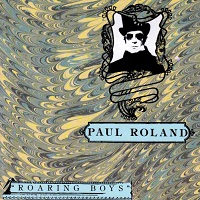
| Paul Roland: "Roaring Boys" (Rose 277, 1991) |
|
Ja, ich weiß, meine kleine Sendereihe ist ja durch, aber ich mache einfach mal weiter. Da ich zuletzt nur Sachen aus meiner Jugend in den 70ern vorgestellt habe, die ich immer noch gut finde, will ich jetzt mal etwas anderes versuchen: Musik aus den bösen 80ern. Für mich stehen die 80er viel für schlechte Musik - auf jeden Fall für schlecht klingende. Aber diese Sicht ist natürlich sehr einseitig und eigentlich gab es damals neben vielen furchtbaren auch viele tolle Platten. Ich will in den nächsten Tagen deshalb Künstler vorstellen, die ich in den 80ern für mich entdeckt habe bzw. die damals ihre Karriere begonnen haben und die für mich immer noch wichtig sind. "Fire Of Love" ist das Debütalbum von Jeffrey Lee Pierce und seinem Pistolenclub, der hier im Prinzip Blues mit einer Punkrock-Attitüde spielt. Eine meiner ersten CDs, denn wie viele Musikhörer habe auch ich etwa ab 1987 geglaubt, dass CDs toll und Schallplatten schlecht sind.
(2020-05-24)